In the news

ruth

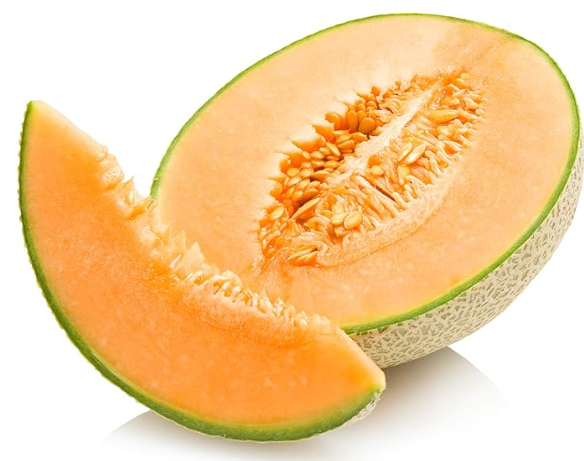
Cantaloupes were upgraded to class I due to Salmonella contamination

As of April 2026, Ayco Farms (Pompano Beach, FL) has recalled 8,302 cartons of whole, fresh cantaloupe due to potential Salmonella contamination; a risk deemed Class I by the FDA. The melons were sold in California, Florida, New York, and Pennsylvania. The cantaloupes were sold in cardboard cartons. Every carton featured six to 12 melons, with individual fruits wrapped in food-safe plastic bags. The FDA updated the classification on a recall initially issued in March for cantaloupe to class I. @ https://www.accessdata.fda.gov/scripts/ires/index.cfm?Product=219361


ruth

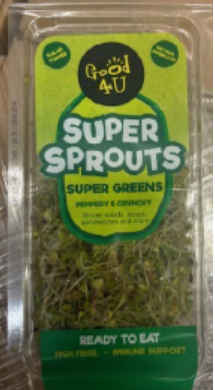
In the UK and Ireland, Good4U recalls Super Sprouts Super Greens due to the possible presence of Salmonella

Good4U is recalling 60 g packages of Super Sprouts Super Greens in the UK due to the possible presence of Salmonella. The recall affects products with use-by dates up to and including 3 May 2026. Customers should not consume the product and return it for a full refund. The Food Safety Authority of Ireland also issued the same alert. The UK is the origin of the products. An urgent ‘do not eat’ warning has been issued for the salad topper sold at Tesco, Sainsbury’s, and Morrison’s. Shoppers are urged to return it to the store where it was bought. @ https://www.food.gov.uk/news-alerts/alert/fsa-prin-20-2026


ruth

Blood pressure drug (Candesartan cilexetil) shows surprising power against MRSA

Scientists have identified an existing drug (Candesartan cilexetil) that can impair MRSA’s survival mechanisms. The discovery hints at a new approach to combating antibiotic-resistant infections without developing entirely new antibiotics. Antibiotic-resistant bacteria continue to outpace modern medicine, causing more than 2.8 million infections and over 35,000 deaths each year in the US alone. Among the most concerning is methicillin-resistant Staphylococcus aureus, or MRSA. Once largely confined to hospitals, MRSA now spreads in communities as well, causing skin infections, pneumonia, and even life-threatening bloodstream infections. A new study published in Nature Communications suggests an unexpected new approach. Researchers found that a widely prescribed blood pressure medication (Candesartan cilexetil, CC) may also help fight MRSA, pointing to a faster, more cost-effective path toward new treatments. The high cost and lengthy development time of new drugs led the team to explore using existing medications approved for other uses to treat bacterial infections. Instead of creating a new antibiotic from scratch, the research team investigated whether existing drugs could weaken bacteria in different ways. Their focus was on the bacterial cell membrane, a structure essential for survival that controls what enters and leaves the cell. They identified CC, a commonly used and inexpensive blood pressure drug, as a promising candidate. Because it is already approved and widely used, its safety profile is well understood, which could significantly shorten the timeline for clinical use in a new role. In laboratory tests, the researchers showed that the drug can combat MRSA by damaging its cell membrane and disrupting essential cellular processes. The treatment killed MRSA cells at multiple stages of growth and also reduced biofilm formation, which are clusters of bacteria that are especially hard to eliminate. @ 

ruth

PIRG report the FDA recall system does not instill confidence in food safety

PIRG is an advocate for consumers, advancing solutions to problems affecting health, safety, and well-being. US. PIRG Education Fund conducts research, policy analysis, and public education to advance solutions to problems that affect consumers’ health, safety, and well-being. A new 2026 US PIRG Education Fund report highlights that food recalls are often not made in a timely manner, with outbreaks sometimes taking years to trigger public warnings, endangering consumers. The watchdog group reports that in 2025, several recalls took months or years, and the FDA failed to publicly announce all life-threatening recalls. For example, in June 2025, the USDA announced recalls involving three ready-to-eat pasta products. Later, 15 additional types of ready-made pasta products were affected. As of the last update on Oct. 30, 2025, 25 people had been hospitalized, and six people had died during this outbreak. Of the 28 outbreaks in 2025, a recall for a certain brand wasn’t announced in 17. Thirteen investigations didn’t identify the type of food. Overall, the FDA and the USDA announced 320 food recalls in 2025, compared with 296 in 2024. The lack of timely recalls linked to outbreaks – or any recall at all – is one of the most interesting takeaways from the US PIRG Education Fund’s 2025 analysis of food recalls and foodborne illnesses. The November recall of infant formula connected to a botulism outbreak took nearly two years; the February recall of frozen supplemental shakes connected to a Listeria outbreak took more than six years. The CAUSES BEHIND OUTBREAKS Salmonella: 636 cases Listeria: 183 cases Cyclospora: 117 cases Botulism: 51 cases E. coli: 11 cases Hepatitis A: 5 cases TOTAL: 1,003 cases. A number of recalls were due to cascading issues from suppliers, since Food producers rely on major suppliers whose ingredients they don’t adequately test. Only 13 of the 22 closed outbreak investigations had a food type. The total number of recall announcements was about the same amount as in 2024, at 320 in 2025 vs. 296 in 2024. The most common cause of the 28 foodborne outbreaks in 2025 (not total recalls) was Salmonella. The No. 1 cause of death in outbreaks was Listeria.